









G.652.D vs G.657.A1 Optical Fiber
Fiber type affects transmission performance, installation flexibility and application suitability. G.652.D and G.657.A1 are both single-mode fiber standards, but they are commonly selected for different route conditions.
G.652.D Fiber
G.652.D is widely used in outdoor backbone, metropolitan and distribution networks. It offers dependable low-loss transmission for long-distance telecom and data communication routes and is compatible with common single-mode systems.
G.657.A1 Fiber
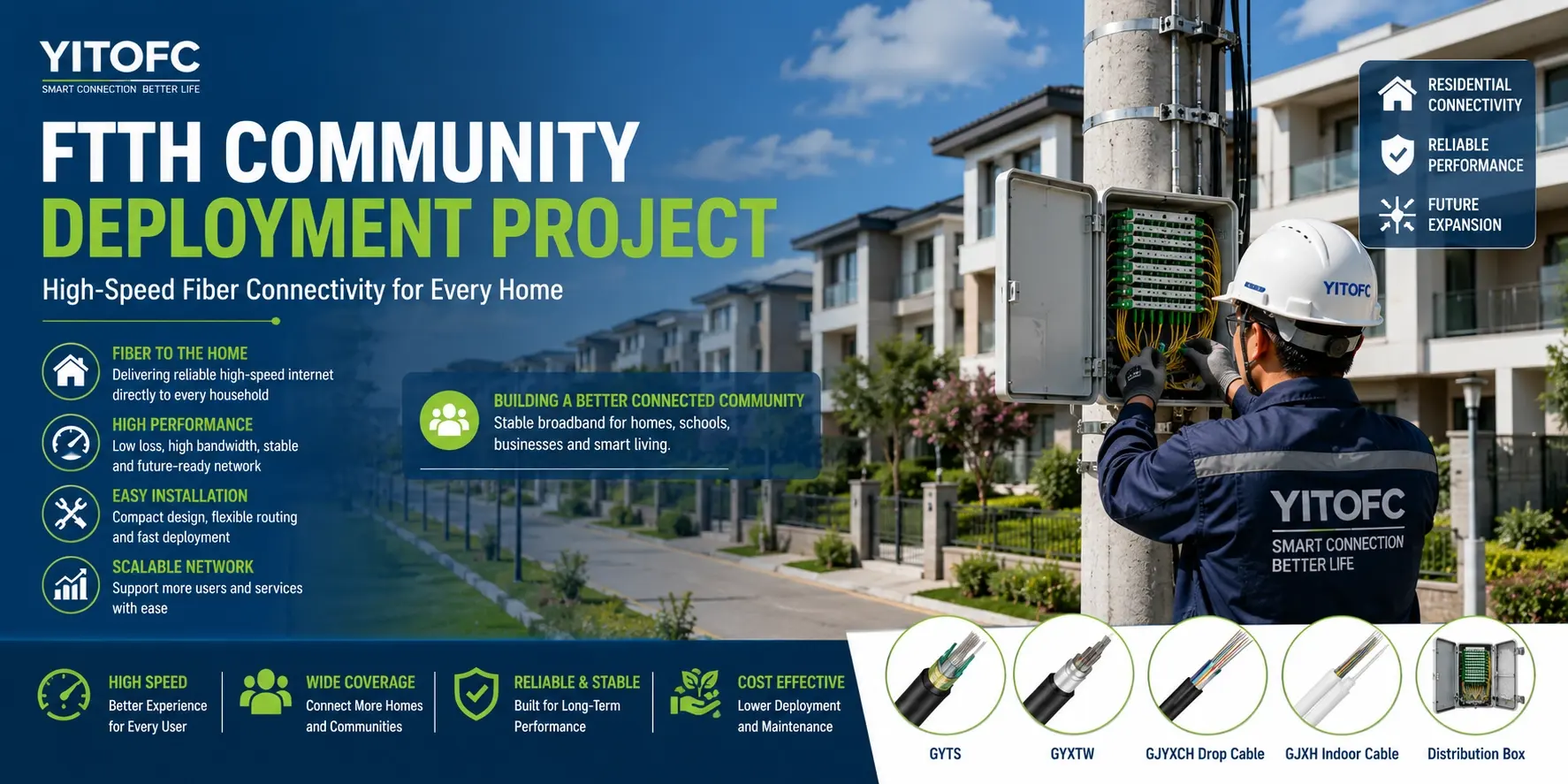
G.657.A1 is designed with improved bend performance. It is commonly specified for FTTH drops, indoor cable, apartment buildings, cabinets and routes where the cable must navigate tighter bends.
Comparison
| Factor | G.652.D | G.657.A1 |
|---|---|---|
| Common use | Outdoor backbone and distribution | FTTH and bend-sensitive access routes |
| Bend performance | Standard single-mode bend behavior | Improved bend tolerance |
| Selection priority | Long-distance outdoor transmission | Flexible routing and indoor access |
Which Fiber Should You Choose?
Use the network design and installation route as the starting point. Outdoor backbone systems often use G.652.D, while FTTH drop and indoor distribution may benefit from G.657.A1. Final values should be confirmed against the applicable cable datasheet and project requirement.
Project Selection Checklist
Start with the route and application rather than a product name. Record whether the cable will be installed in duct, directly buried, aerial, wall-mounted or indoors; then confirm the fiber count, required capacity, expected service life and future expansion plan.
Information to Prepare Before Quotation
- Installation method and route condition
- Fiber count, fiber type and target application
- Mechanical conditions such as span, tension, crush risk, UV and moisture exposure
- Quantity, length per drum, delivery destination and packing requirement
- Required standards, labels, test reports and technical documentation
Common Specification Mistakes
Do not select a cable solely by its name, fiber count or lowest unit price. Similar-looking products may use different armor, water-blocking design, strength members, sheath material or test scope. Confirm the data sheet, construction drawing and inspection requirement before placing a volume order.
FAQ
Can the cable be customized for my project?
Yes. YITOFC can review fiber count, fiber type, cable structure, jacket, color, printing, meter marking, drum length and export packing according to the confirmed application.
Should I request samples or documentation first?
For a new model, tender or distribution program, request the technical data sheet and confirm the key construction details before production. Samples can be discussed according to the cable type and project requirement.
Talk to a Cable Specialist
Send your route information, fiber count, quantity and destination country to YITOFC. Our team can recommend a suitable cable structure and prepare a quotation with the relevant product information.